
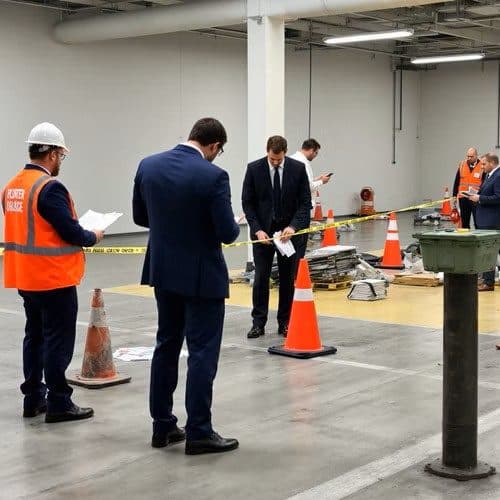
Clients often ask what to expect if a WHS Inspector attends their workplace. For many businesses, there is a degree of uncertainty, and sometimes unease, when an inspector arrives on site.
This is based on my experience as a former WHS Inspector. Depending on the jurisdiction, there may be some differences, but the general approach is largely consistent.
Why inspectors attend
Inspectors will usually attend for a specific reason, such as:
- a serious incident or injury
- a complaint raised by a worker
- a targeted compliance program
If an inspector attends following a serious incident, the focus will be on the incident itself. They will begin their investigation by understanding what happened, what systems were in place, and how the risk was being managed, including the training and supervision provided. As part of this process, they will gather evidence. This may include speaking with workers, reviewing documents, taking photographs and observing the workplace. From there, the investigation may expand depending on what is identified.
If the visit relates to another reason, such as a complaint or proactive inspection, the inspector may take a broader approach. This often includes a walk-through of the workplace and discussions about how risks are identified and managed.
Inspections relate back to your primary duty of care
Inspections and investigations ultimately come back to your primary duty under WHS legislation: ensuring, so far as is reasonably practicable, the health and safety of workers and others.
That duty includes providing and maintaining safe systems of work, safe plant and equipment, safe use and handling of substances, and making sure workers have the information, training, instruction and supervision they need to work safely.
Inspectors are looking for evidence that this duty is being met in practice. This may include:
- risk assessments and safe work procedures relevant to the task
- training and induction records for workers involved
- records of inspections and maintenance of plant and equipment
- incident reports and investigation records
- evidence of supervision arrangements
The focus is on whether risks have been identified, controls are in place, and those controls are being implemented and maintained.
Powers of inspectors
Inspectors are required to identify themselves and notify the PCBU on entry, and will advise of their powers at that point. This requirement does not apply where notification would defeat the purpose of the entry or cause unreasonable delay.
These powers may include:
- inspecting the workplace and observing work activities
- speaking with workers and management
- requesting documents or records
- taking photographs or recordings
- requiring reasonable assistance
Inspectors may also formally require the production of documents or information relevant to the matter they are investigating. Where this occurs, the business is required to comply, except for documents subject to legal professional privilege. In some situations, businesses may also choose to voluntarily provide documents to help the inspector understand how their systems operate.
Inspectors often start with what they can see
Inspectors will usually walk through the workplace and observe what is happening. Simple things can give an immediate indication of how safety is being managed more broadly.
For example, they may look at whether:
- fire extinguishers appear to be within test date
- evacuation diagrams are displayed
- emergency exits are clearly marked and unobstructed
- first aid kits are adequately stocked and in date
- emergency contact information is displayed
- there are any obvious slip, trip or fall hazards
If these basic indicators are not in place, it can raise questions about how safety is being managed more broadly.
Health and Safety Representatives
Inspectors will usually ask whether there is a Health and Safety Representative (HSR) in the workplace. Where an HSR is in place, they may be involved in discussions and can accompany the inspector during the inspection.
Psychosocial risks
Even where an inspection starts with a physical issue, inspectors may also ask how psychosocial hazards are being managed. This includes looking for evidence of how psychosocial risks have been identified, assessed, consulted on and controlled, and what controls are in place to manage and monitor them.
What happens if issues are identified
If an inspector identifies risks or non-compliance, they may take a range of actions depending on the circumstances. This can include:
- providing advice or guidance
- issuing an Improvement Notice requiring issues to be addressed
- issuing a Prohibition Notice where there is a serious risk
- issuing an Infringement Notice where an offence provision has been breached
- issuing a Non-disturbance Notice to preserve a site
In more serious matters, particularly following a serious incident or injury, inspectors also have the power to seize items as evidence, including plant, substances, documents or structures. Where a serious incident has occurred, a breach of the legislation has been identified, or ongoing non-compliance exists, further investigation may occur and prosecution action may be considered.
A final thought
It is always better for an issue to be identified during an inspection and addressed, rather than remaining unknown and leading to a serious incident. An inspector visit can highlight gaps and provide the opportunity to resolve them before something goes wrong.